
The global shift toward electric mobility has been gaining momentum for years, but something different is happening across Asia now. EVs are no longer just a tech trend or a climate milestone. They’re starting to shape how countries think about jobs, manufacturing, and long-term economic growth. The latest IEA data shows sharp rises in EV adoption across emerging Asian markets, and that momentum is beginning to influence everything from trade flows to local industry. It’s a transition that goes far beyond cars, raising a much bigger question: what does this shift really mean for Asian economies over the next decade?
The EV Wave Sweeping Through Asia
The International Energy Agency (IEA) notes that in 2024, the electric-car sales in emerging Asian economies, outside China, jumped by more than 60%, reaching nearly 600,000 units. Southeast Asia alone saw sales climb by almost 50%, with EVs making up around 9% of new car sales. Those numbers may not sound dramatic on their own, but for developing markets with price-sensitive consumers and infrastructure gaps, they’re meaningful signs of change.
The IEA expects global electric-car sales to exceed 20 million units in 2025. In Southeast Asia, meanwhile, electric car sales are boosted by strong policy support and growing domestic manufacturing capacity. By 2030, one in four cars sold in the region is poised to be electric. With governments rolling out tax breaks, tightening emission standards, and attracting global automakers to set up shop locally, the region is steadily building an EV ecosystem that’s both competitive and resilient.
China: The Anchor of Asia’s EV Momentum
No discussion of Asia’s EV landscape is complete without China, the world’s largest EV market and manufacturing powerhouse. BBVA Research highlights how China’s dominance affects both regional supply chains and global trade flows. Its scale-driven cost advantages, battery leadership, and mature domestic industry mean that China is not only producing the majority of the world’s EVs but also exporting them aggressively. This influence is already visible across emerging markets. In Brazil and Thailand, for example, 85% of EV sales in 2023 came from Chinese manufacturers. Across all emerging markets, 75% of the increase in EV sales in 2024 was driven by Chinese imports, according to the IEA. For Asia, China’s momentum is both an opportunity —through supply-chain integration and investment — and a signal that countries must accelerate their own domestic capabilities if they want to capture value rather than simply import it.
Manufacturing And Industrial Opportunity
The surge in EV adoption is opening a massive industrial window for Asian economies. EVs rely on batteries, components, electronics, software, materials processing, and assembly — an industrial ecosystem far broader than traditional automotive production. Countries that build this ecosystem stand to benefit through:
- higher-value industrial capacity
- new jobs across engineering, operations, and supply chains
- export opportunities in batteries, components, and vehicles
- stronger participation in global mobility markets
But many emerging Asian economies still rely heavily on imported EVs. Without local manufacturing, supply-chain investment, and workforce development, much of the value created by rising EV demand will flow outward. Building local supply chains, attracting investment in batteries and components, and upgrading workforce capabilities are essential to ensure the transition benefits local economies rather than bypassing them. This is where policy becomes critical: incentives, tariff structures, and local-production requirements can determine whether a market becomes a manufacturing hub or an import destination.
Consumer Behaviour and Cost Structures
McKinsey’s analysis shows that 40–50% of consumers in India and Europe list pricing as one of their top concerns when considering electric two-wheelers. For passenger vehicles, the pattern is similar. Even though battery costs are falling, making the value proposition compelling is still a work in progress. In India’s case, McKinsey notes that for two- and three-wheelers, the total cost of ownership is likely to become attractive by 2030; but for passenger vehicles and heavy commercial vehicles, internal-combustion engines are expected to continue dominating for now. On the broader car market, under current policy settings, by 2030, the share of electric cars in new-car sales is expected to exceed 40 % globally. All of this means Asia’s EV transition is not just an engineering challenge or an infrastructure race. It’s also a financial equation for millions of daily users. Without stronger affordability, better financing options, and long-term policy clarity, adoption will lag. And when adoption slows, the industrial opportunity behind it slows too. Ultimately, the pace at which households can realistically make the switch will determine how quickly Asia can build the domestic scale required to support a competitive EV ecosystem.
Infrastructure and Grid Readiness: The Biggest Constraint
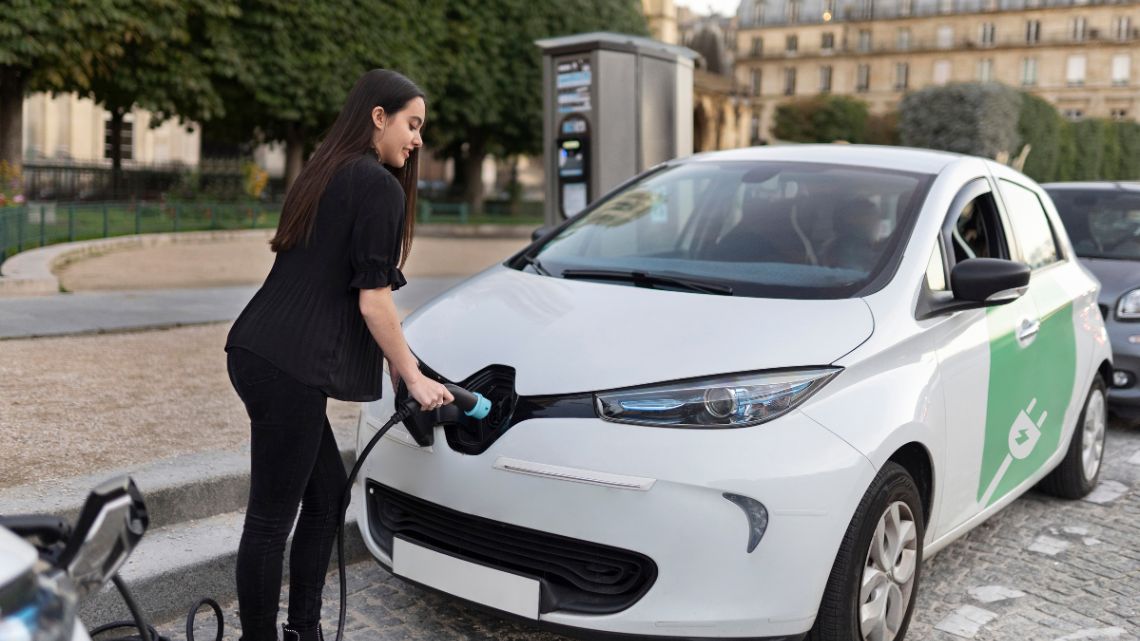
No matter how fast sales rise or how ambitious national targets look on paper, the EV transition ultimately moves at the speed of infrastructure. Charging networks, grid capacity, battery-recycling systems — these are the pieces that determine whether adoption feels effortless or frustrating. The IEA points out that more than 1.3 million public charging points were added globally in 2024, a 30-plus percent increase. But Asia’s coverage is uneven. China remains far ahead, while much of Southeast Asia is still in the early stages of building out public charging access. Countries like Indonesia, Malaysia, and the Philippines are seeing rising EV interest and now trying to accelerate infrastructure investments just to keep pace with demand. But the gap isn’t just about chargers. It’s also about the grid.
A growing EV fleet means higher electricity demand, and many Southeast Asian grids are still strengthening reliability, renewable integration, and overall capacity. Without coordinated investments in the grid and charging infrastructure, EV adoption risks bottlenecking, regardless of how appealing or affordable the vehicles themselves become.
Battery recycling is another space where Asia is just beginning to build momentum. As more EVs enter the market, countries will need robust systems for end-of-life battery collection, processing, and reuse. All of this makes one thing clear: the strength of the EV transition will depend on how quickly countries can build the systems that support it. Adoption can rise, policies can evolve, and consumer interest can grow, but without reliable charging, stable grids, and clear plans for battery management, progress will hit limits.
Energy Security and the Shift Away from Oil
One of the biggest long-term effects of the EV transition is its impact on energy security. As EV adoption increases, many Asian countries especially India, Thailand, and Indonesia have the chance to reduce their dependence on imported oil. The IEA notes that as global EV sales rise, countries begin to see meaningful changes in fuel demand, shifting the balance toward electricity and, increasingly, renewables. For import-reliant economies, this is not just an environmental benefit; it becomes an economic stabiliser. Lower oil dependence helps reduce vulnerability to global price shocks, improves trade balances, and encourages investment in domestic energy resources. Over time, this shift can strengthen economic resilience while creating new industries around energy storage, grid technology, and clean-power generation.
What This Means for Asian Economies Over the Next Decade
Pulling these trends together, the rise of EVs is already shaping Asia’s economic landscape in several ways:
• New manufacturing opportunities: EVs aren’t only creating demand for new cars; they’re spurring growth in everything around them — battery plants, assembly lines, parts suppliers, and the software that ties modern mobility together.
• Job creation across multiple sectors: From engineers and factory technicians to the people who build charging networks and upgrade electricity grids, the EV shift is creating work across a wide range of sectors.
• Reduced oil-import dependency: In countries where oil imports weigh heavily on national spending, the shift toward EVs can slowly rebalance energy needs and strengthen overall security.
• Attracting investment: Countries that develop strong EV ecosystems are already drawing investor interest across batteries, renewables, software, and mobility services.
• A more competitive export landscape: Nations that build up their EV manufacturing now can compete for a share of rising global demand, much like China has done with its large-scale production and exports.
The Bottom Line
Asia’s EV shift is revealing a hard economic reality: adoption alone won’t move the needle. What will matter over the next decade is whether countries can turn rising EV demand into local value — local factories, local supply chains, local jobs, and local energy resilience. If that conversion doesn’t happen, the region will end up trading oil dependency for dependency on imported EVs and battery technology. If it does, EVs could become one of the biggest drivers of industrial upgrading Asia has seen in years. The opportunity is real, but so is the risk of missing it.