
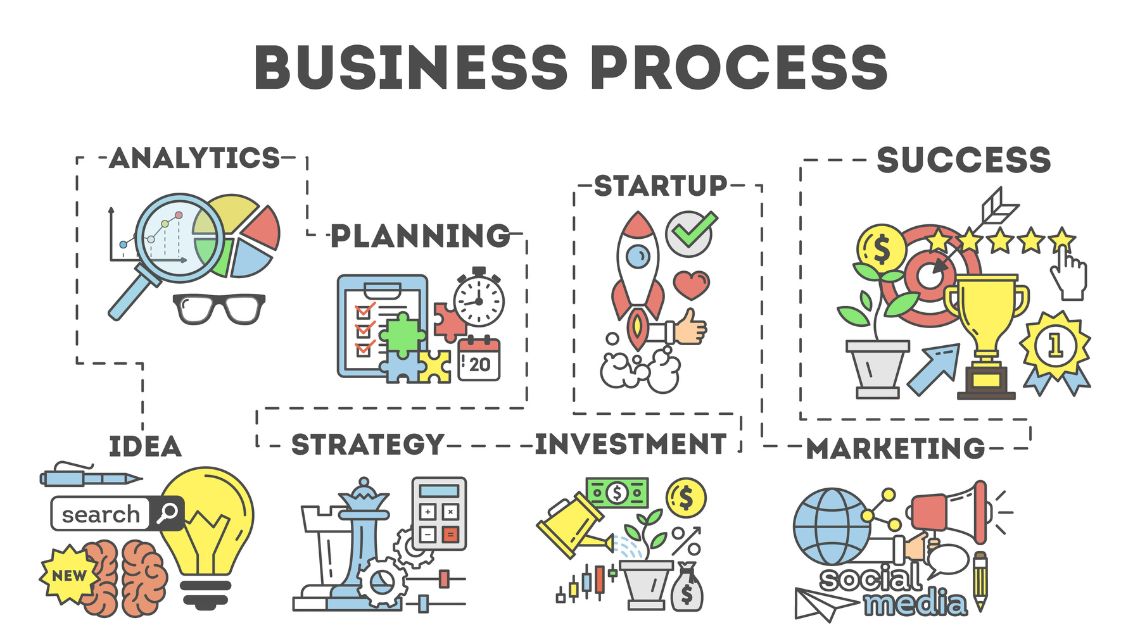
In the business world, processes are essential for every organization. Processes are coordinated actions that produce a result most efficiently and reliably to achieve goals. Knowing a business process, its importance, its types, and the steps involved increases operational efficiency and helps with strategic planning.
This blog entry will address the key characteristics of business processes and provide a complete picture, the implementation of processes and the benefits to the organization.
What Is a Business Process?
A business process is the backbone of any organization. Simply, it’s the collective activities and workflow of every task happening in your business that make it operate and achieve its business objectives. It’s the way employees work, often through a series of cohesive steps and workflows. So, if your business processes aren’t operating as efficiently as they could be, then neither is your business.
3 Types of Business Processes
Operational processes
Operational processes, or core business processes, are those that ultimately provide direct value to customers and value to the organization. Simply, these processes are responsible for producing revenue. There are numerous operational processes, which include: products manufactured for sale, the billing of customers, and how you deliver value to customers.
Support processes
These processes create and enable support processes for subsidiary functions that help your core processes. They are not responsible for producing revenue, but they support internal functions of the business that create a teamwork environment and foster the core processes to work better together. Human resources, financial business management, administration, and operations are all support processes that help an organization grow.
Management processes
These processes establish and regulate the core and supporting activities of the development process when developing or improving a process. The process is future-oriented, directing the course of the business so that operations run, blend smoothly. In addition, their focus is on how to observe business capabilities internally and externally, and define where they can improve opportunities and obstacles.
Why are business processes important?
Creating a unified perspective
Business processes have the purpose of helping team members be involved in common goals while getting their day-to-day work done. If the team wants to improve customer satisfaction, they can create a business process for that purpose by identifying the people, tools, and tasks in the process.
Supporting consistency
Documented business processes for an organization can also guarantee that tasks are completed in the same way, regardless of who is executing them. Documentation, processes, and procedures help limit errors and lower the risk.
Efficiency
Streamlined processes eliminate duplication, cut waste, save costs, and increase productivity, while consolidating work arrangements. This helps to improve efficacy and business growth.
Ensuring compliance
Business processes make it easy and more systematic to generate audit trails, follow policies, also ensure compliance with industry regulatory standards.
Inspiring innovation
Most business processes incorporate stages of reflection, collaboration, and creativity to encourage teams to inspire innovation to address commonly shared problems.
How to build a business process in 6 steps
Define your goal
Be clear about the particular process you would like to develop or improve. It will be necessary to define objectives as well as purposes for it.
Model
Create a workflow chart representing the whole process as well as the roles of employees involved in each step.
Implement
Make sure all necessary resources are available before commencing this activity into practice.
Execute
Track data to determine whether the process is doing its intended job or not until it reaches its defined goals. You can make any adjustments as necessary during operations if something goes wrong.
Monitor
Monitor the Key Performance Indicators and keep records of the process to ensure it’s proper working.
Optimize
This relates to methods that help control waste and provide efficiencies within the organization for better performance.
Repeat
Periodic reviews should take place in order to continuously improve the whole process to ensure the process remains relevant to organizational goals and adequately responds to changes in the environment.
Key areas to implement business processes
Sales: The field to implement the process is to set up a CRM as a customer interaction tool. A CRM allows you to interact with your customers through digital channels that build a relationship.
Logistics: You can implement business management strategies with your company’s logistics team to set up a warehouse management system (WMS). A WMS allows your teams to place orders for materials, inventory, reports, etc, on levels of stock and consumption of materials.
Marketing: The marketing team is well-suited to business processes in order to help the team deliver consistent projects amongst themselves, such as web content and planning out campaigns etc.
Customer service: A company implementing business processes can develop knowledge bases or FAQs. Another approach in business processes for your customer service team is through the use of a communication platform.
Accounting and finance: Business processes can be introduced in finance and accounting to manage transactions with security. Companies also automate invoices, bank accounts, automatic notifications, etc, for safer and errorless transactions.
To read more, visit APAC Business Standard.
For Connect with Us:
About Us: https://about.me/apacbusinessstandard/
Pinterest: https://in.pinterest.com/apacbusinessstandard/
X (Twitter): https://x.com/Apac_b_standard
linkedin: https://www.linkedin.com/company/apac-business-standard/
Facebook: https://www.facebook.com/ApacBusinessStandard
Instagram: https://www.instagram.com/apacbusinessstandard/
Medium: https://medium.com/@apacbusinessstandard
BlogSpot: https://apacbusinessstandard.blogspot.com/