
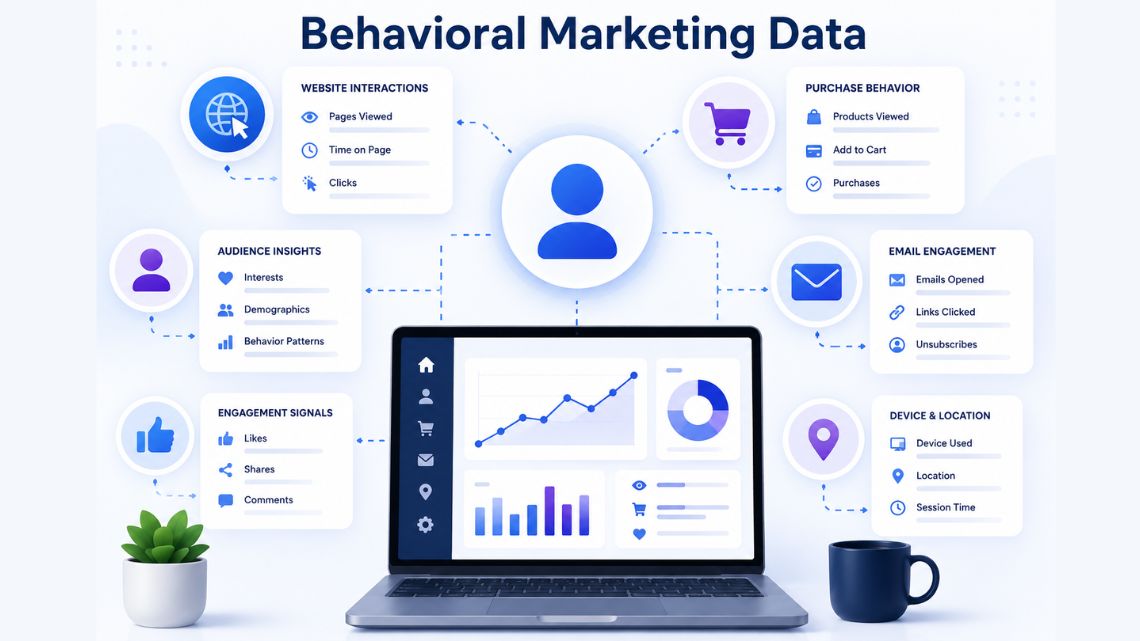
Marketing strategies have transitioned away from conventional demographic targeting toward more behavior-based strategies centered on customer intent and action. Over 80% of customers today expect personalized experiences throughout all the digital channels, therefore, behavioral insight has become increasingly valuable for marketers. With unprecedented advancements in technology including analytics, AI, and automation, enable businesses to collect engagement patterns in real time to help improve marketing efforts, enhance targeting decisions, and streamline engagement driving decisions. This blog delves deeper into Behavioral Marketing Data, how it is collected, the major types and why it is crucial to the success of marketing in this contemporary age.
What is Behavioral Marketing Data?
Behavioral marketing data refers to the digital record of specific actions performed by prospects and customers with a brand across the various digital platforms including website interactions, content, emails, product advertisements etc. These data can unlock information about what the targeted audience segment usually clicks, read, search, purchase and engage with in digital platforms. Marketers can capitalize such information to create meaningful digital marketing expertise that directly resonates audience intent.
Unlike the traditional marketing, which centers on who customers are, Behavioural marketing rather prioritizes strategic variables such as customer preferences, engagement patterns, intent signals, and buying behaviors based on advanced segmentation attributes. The conventional entrepreneurial marketing segmentations were more focused on demographic data—Age, Gender, Occupation, Geographic location, and transactional data—Order history, Payment behavior, Subscription renewals, Purchase frequency, Income level—for audience profiling, revenue tracking and customer value analysis. As behavioral insights are dynamic and intend-rich, it provides marketers a clear blueprint of what they need to exactly accelerate in order to transform interactions into conversations.
How behavioral data is collected
The collection of behavioral data typically performed throughout the digital touchpoints by leveraging data tracking technologies. These includes:
- Website analytics platforms
- CRM systems
- Marketing automation tools
- Mobile applications
- Cookies and tracking pixels
- Customer Data Platforms (CDPs)
- Social media analytics
- AI-powered monitoring systems
Using technology, organizations are able to process critical behavioral signals, enabling them to translate it to build business strategies that reciprocate prospect intent and direct a coherent journey.
Types of Behavioral Marketing Data
- Website Behavior
This data reveals user intent across the website interactions.
Examples include:
- Page visits
- Click patterns
- Session duration
- Navigation paths
- Bounce rates
This information helps organizations identify customer interests and optimize website performance.
- Content Engagement Data
It is a proxy for measuring how audiences react to digital content consumption. This includes:
- Blog engagement
- Video views
- Webinar participation
- Whitepaper downloads
- Podcast interactions
By this analysis, equip marketers to refine content formats and foster rate of engagement.
- Purchase and Transaction Behavior
Transactional behavioral data provides signals regarding buying patterns, churn risk and help unlock expansion opportunities.
Examples include:
- Purchase frequency
- Average order value
- Cart abandonment
- Product preferences
- Renewal behavior
- Email and Campaign Engagement
Email engagement metrics help evaluate campaign effectiveness.
Examples include:
- Open rates
- Click-through rates
- Conversion rates
- Subscription activity
- Response behavior
Behavioral email analytics improve campaign personalization and lead nurturing strategies.
- Social Media Behavior
Social media behavioral data tracks audience interaction across social platforms.
Examples include:
- Likes and shares
- Comments
- Engagement rates
- Audience sentiment
- Influencer interactions
This helps brands measure brand perception and optimize social media strategies.
- Search and Intent Data
Search behavior reveals customer intent and research patterns.
Examples include:
- Search queries
- Keyword engagement
- Product research activity
- Intent signals
Prospect behaviour is particularly integral in B2B brand marketing, as it aids businesses effectively target high-intent prospects earlier in the buying journey.
Why Behavioral Marketing Data is Important
- Enables Personalized Customer Experiences
Behavioral data is one of the commercial assets for unlocking enhanced revenue streams in B2B marketing. When businesses design personalized interactive points across a marketing journey—emails, advertisement, sales outreach, they can seamlessly calculate where prospect is at their purchase journey. Tailored marketing journey using dynamic content delivery, recommendations, intent reflective messaging, and contextual advertising, improving customer satisfaction and experience.
- Improves Audience Segmentation
While traditional segmentation methods often rely on firmographic segments and static audience categories. Behavioral segmentation is more dynamic, as it groups prospect behaviours leveraging actions such as accounts active on research modes, engagement patterns, risk of churn. This improves targeting precision and campaign effectiveness.
- Higher Conversion Rates
Behavioral insights help organizations identify the trigger points of potential prospects using intended signals. This helps them optimize conversion funnels through more personalized offers, deliver timely messaging, reduce customer friction, and improve lead qualification. Such strategies can translate to stronger conversion performance.
- Targeted Marketing & Remarketing
Behavioral data strengthens retargeting precision, allowing organizations to provide pricing focused strategies for reconnecting with users based on previous interactions.
Businesses can integrate:
- Cart abandonment campaigns
- Personalized ads
- Product retargeting
- Behavioral email automation
This improves marketing efficiency and ROI.
- Predicting Future Trends
Harnessing technology conveniences such as AI driven analytics and machine learning, businesses can aggregate behavioral patterns to forecast future marketing interests and trends. This supports churn prediction, product trend analysis, and campaign planning in relevance to demand.
By understanding where buyer attention is heading toward over a course of period, marketers can early refine strategies to redirect attention into their digital space.
- Improved User Experience (UX)
Behavioral analytics help organizations identify user friction points, and engagement barriers with web navigation experience.
This allows businesses to optimize:
- Website design
- Customer journeys
- Application interfaces
- Conversion pathways
Improved user experiences contribute to stronger customer retention and loyalty.
Conclusion
Business marketing that revolves around behavioral patterns such as purchasing behavior,intent integrations in marketing initiatives will help unlock opportunities to stay ahead of marketing trends and cultivate enhanced user experience, improve relationships and build a foundation for lasting growth.
Visit APAC Business Standard for more articles.
For Connect with Us:
About Us: https://about.me/apacbusinessstandard/
Pinterest: https://in.pinterest.com/apacbusinessstandard/
X (Twitter): https://x.com/Apac_b_standard
linkedin: https://www.linkedin.com/company/apac-business-standard/
Facebook: https://www.facebook.com/ApacBusinessStandard
Instagram: https://www.instagram.com/apacbusinessstandard/
Medium: https://medium.com/@apacbusinessstandard
BlogSpot: https://apacbusinessstandard.blogspot.com/