
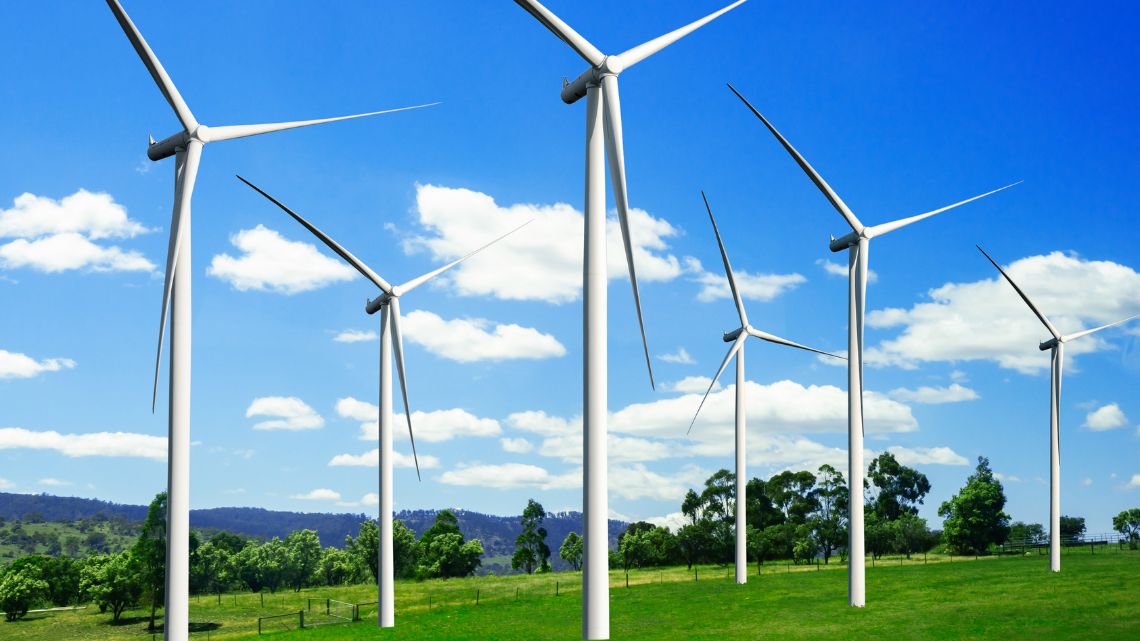
GE Vernova has reinforced its long-term commitment to Australia’s clean energy transition through a new agreement with Aula Energy to supply wind turbines for the Carmody’s Hill Wind Farm. The project, located in South Australia’s Mid-North region, marks another milestone in the country’s rapidly evolving renewable energy ecosystem. With 42 high-capacity turbines forming the backbone of the development, the project reflects Australia’s accelerating shift toward large-scale, utility-grade wind power as a cornerstone of its energy future.
This agreement comes at a time when Australia is navigating the dual challenge of replacing aging thermal assets while ensuring grid stability and affordability. Wind energy, supported by proven technology platforms and streamlined regulatory pathways, is emerging as one of the most dependable solutions. The Carmody’s Hill project illustrates how established technology and experienced partnerships can help deliver renewable infrastructure at scale without compromising reliability.
Building on a Proven Partnership Model
The Carmody’s Hill Wind Farm follows closely on the heels of the Boulder Creek Wind Farm in Queensland, another project delivered through collaboration between GE Vernova and Aula Energy. That earlier project, finalized in 2024, laid the groundwork for a more efficient contracting and development process, enabling both parties to replicate and refine technical and commercial frameworks.
Such continuity is increasingly valuable in the renewable sector, where permitting timelines, grid integration requirements, and supply-chain constraints can introduce uncertainty. By relying on a standardized turbine platform and an established working relationship, both companies have been able to reduce negotiation cycles and move more quickly from agreement to execution. This approach reflects a broader trend in the energy industry, where repeatable project models are becoming essential to meeting ambitious decarbonization targets within tight timelines.
The Role of Technology in Accelerating Grid Integration
At the core of the Carmody’s Hill Wind Farm is GE Vernova’s 6 MW-class onshore wind turbine platform, designed to balance scale, performance, and grid compatibility. One of the most notable aspects of the project is the speed with which grid connection approval was secured, achieved within nine months of application submission. This is a significant benchmark in a market where grid access is often cited as one of the most complex hurdles for renewable developers.
The ability to accelerate approvals is not incidental. It stems from the platform’s established operational track record across multiple Australian states, giving regulators and grid operators confidence in its performance characteristics. As renewable penetration increases, such confidence becomes critical, particularly in regions where variable generation must coexist with legacy infrastructure. Carmody’s Hill demonstrates how technological consistency and regulatory familiarity can reduce friction and enable faster deployment of clean energy assets.
Economic and Community Dimensions of Wind Development
Beyond its technical significance, the Carmody’s Hill Wind Farm carries important economic and social implications. Located near the town of Georgetown in South Australia, the project is positioned to contribute to regional development through job creation, long-term operations activity, and community engagement. Aula Energy has emphasized the importance of delivering shared value, including meaningful benefits for local communities and the Nukunu People.
This emphasis reflects a broader evolution in how renewable projects are conceived and delivered in Australia. Increasingly, developers are expected to demonstrate not only environmental benefits but also tangible local outcomes. Projects that successfully integrate community interests are more likely to secure social license and long-term operational stability, reinforcing the importance of partnership-driven development models.
Australia’s Strategic Importance to GE Vernova
Australia occupies a unique position within GE Vernova’s global portfolio. With a presence spanning more than a century, the country has evolved into a critical hub for the company’s wind, gas, grid, and software capabilities. Today, thousands of megawatts of GE Vernova technology are either operating or under construction across the nation, supported by a substantial local workforce and engineering base.
The Carmody’s Hill project also reinforces GE Vernova’s distinction as the only wind turbine manufacturer to have successfully closed wind projects in Australia every year for nearly a decade. This consistency underscores not just market access, but deep familiarity with Australia’s regulatory environment, grid requirements, and operating conditions. As the country pushes toward higher renewable penetration while maintaining reliability and affordability, such experience becomes a strategic asset.
Scaling Renewables with Confidence
The agreement between GE Vernova and Aula Energy is more than a single project announcement; it is a case study in how scale, standardization, and sustained partnerships can drive progress in the renewable energy sector. Carmody’s Hill Wind Farm highlights the value of deploying proven technology platforms, building long-term collaborations, and aligning technical innovation with regulatory and community expectations.
As Australia continues its energy transition, projects like Carmody’s Hill signal a maturing market, one that is moving beyond experimentation toward repeatable, high-quality delivery. For the broader Asia-Pacific region, this model offers insights into how renewable energy can be expanded rapidly while maintaining the resilience and reliability that modern economies demand.