
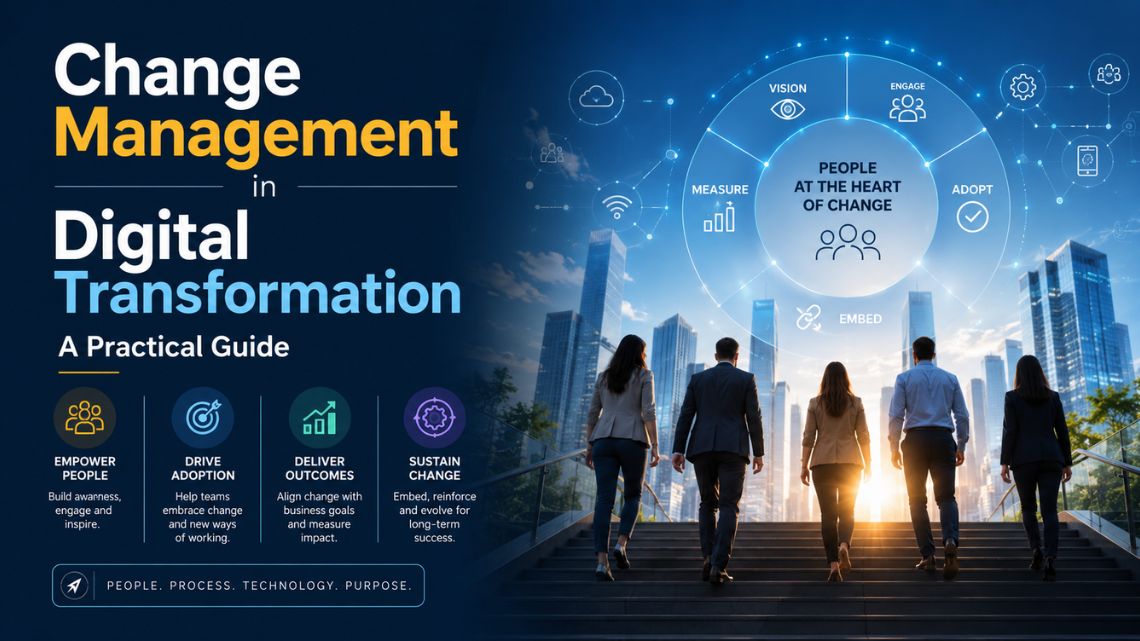
Change management in this ever-evolving digital era is fundamentally defined by how businesses establish numerous factors such as human adoption, cultural readiness, operational innovation while maintaining technology as a key enabler. In an era of overlapping evolutions, emerging skill gaps and increasing competition, technology alone is no longer sufficient to achieve successful digital transformational goals.
This blog explores the proactive tactics to drive change while maintaining employee engagement, and guide outcomes that contribute for long-term business growth in a digitally evolving world.
The Core Drivers of Digital Transformation
- Technological disruption
The unprecedented advancements in technology over the legacy systems including artificial intelligence (AI), process automation, cloud computing and big data analysis have contributed to a new wave of industrial revolution. Innovation and competitive efficiency is now defined by at what scale organizations are adapted with the emerging business management models in the market as well as the current trends. Those businesses that do not embrace innovative business models will find themselves losing ground in a digital-first competitive landscape and relevance in the marketplace.
- Changing customer expectations
Customers now expect to receive an instantaneous, tailored and seamless digital experience. A large number of companies are therefore investing heavily in digital tools and data-driven methodologies to create engaging customer interactions and improved delivery of services through numerous different channels. If organisations fail to evolve up to these expectations, it may lead to reduced retention as well as difficult to sustain as a trusted partner among them.
- Competitive pressure and market evolution
The constant evolution of the marketplace and the need for organisations to constantly innovate is swiftly becoming the norm as the market redefines itself through digital transformation. Businesses are now able to react to customer behaviour changes at a faster pace, market disruptions and new business opportunities that will allow them to leverage the maximum advantage of further growth. Embracing new market trends will support businesses of any scale position themselves as a frontline leader amid the competition.
- Remote and hybrid work models
In this age, businesses across the globe are witnessing a rapid shift toward completely remote or hybrid work modes, which have eventually accelerated the quest for digital workspaces. With the use of distributed collaboration tools, cloud based infrastructure and communication are vital in supporting the productivity and effectiveness of remote and hybrid workforces. How the leadership management authorities and managers cultivates environments for engagement regardless of the location barrier will be a cornerstone element to success in modern work settings.
- Regulatory and compliance requirements
Exceptionally, organisations need to contend with the compliance and data usage with the increasing regulatory and compliance requirements associated with cyber security, data privacy and regulatory compliance. Organisations must allocate resources in a manner that the digital transformation initiatives aligns with the current industry standards, while ensuring a secure environments for operations as well as safeguarding confidential informations from cyber threats.
Common Challenges in Managing Digital Change
- Employee resistance to new systems and processes
- Lack of leadership alignment
- Poor communication strategies
- Skills gap and digital literacy
- Cultural inertia and organizational silos
Step-by-Step Change Management Framework for Digital Transformation
- Define the Vision and Objectives
Primarily, enterprises must document a purposeful vision by quantifying the “Why’s” for the transformation and ensure to align digital initiatives with business milestones. By establishing measurable objectives, it supports teams to understand their purpose and role in the outcomes of change.
- Conduct Change Readiness Assessment
The evaluation of change maturity is an indispensable element prior to the implementation. It includes assessment of cultural polarity, potential resistance areas, and internal obstacles. This audit helps identify risk areas early and develop successful mitigation strategies.
- Build a Change Leadership Team
A dedicated leadership is the core pillar of successful change management strategy. Secure management lines with active and visible executive champions, leaders who possess influential and tech-positive environments, representatives from cross functional committees to guide the transformation process. Entrepreneurs and change sponsors are critical enablers in establishing internal alignment, accountability and motivation in employees.
- Develop a Communication Strategy
A clear and transparent communication strategy is essential for building trust and eliminating the corporate turmoils throughout the transformation journey. Map channels to the audience, address WIIFM, and continuous feedback loops to demonstrate the purpose, available support and what needs to be addressed during this phase.
- Implement Training and Upskilling Programs
Organizations must ensure that employees understand and proficiencies for the new implementations. Through facilitating role based training, and AI-driven personalized learning opportunities, employees are able to align with the role based curriculums, diversify delivery methods, and provide real time support.
- Execute in Phases
Phased implementations—pilots programs, test systems, continuous iterations will help eliminate the possibilities for disruption and refine outcomes before full deployment.
- Monitor Adoption and Performance Metrics
Track adoption rates—usage rate, process speed, employee sentiment, gather employee feedback, and business performance. This helps organizations measure the impact and identify areas for improvement.
- Reinforce and Sustain Change
Long-term success in change management is primarily the aggregate result of ongoing reinforcement. Organizations must recognize employee contributions, support continuous improvement, and integrate new practices into company culture.
Conclusion
To execute successful transformations in the age of tech revolutions, organizations must focus on bridging the gap between technology strategy and human execution. By providing influential leadership, clear communication, effective employee training and ongoing employee support; the critical factors for successful change management organizations can accelerate tool adoption, eliminate internal bottlenecks, and optimize ROI. The arena of digital transformation is undergoing a cutthroat revelry, therefore businesses that orchestrate a strategic management plan for business transitions will position better to be innovative, proactively responding and remain resilient in the long term.