
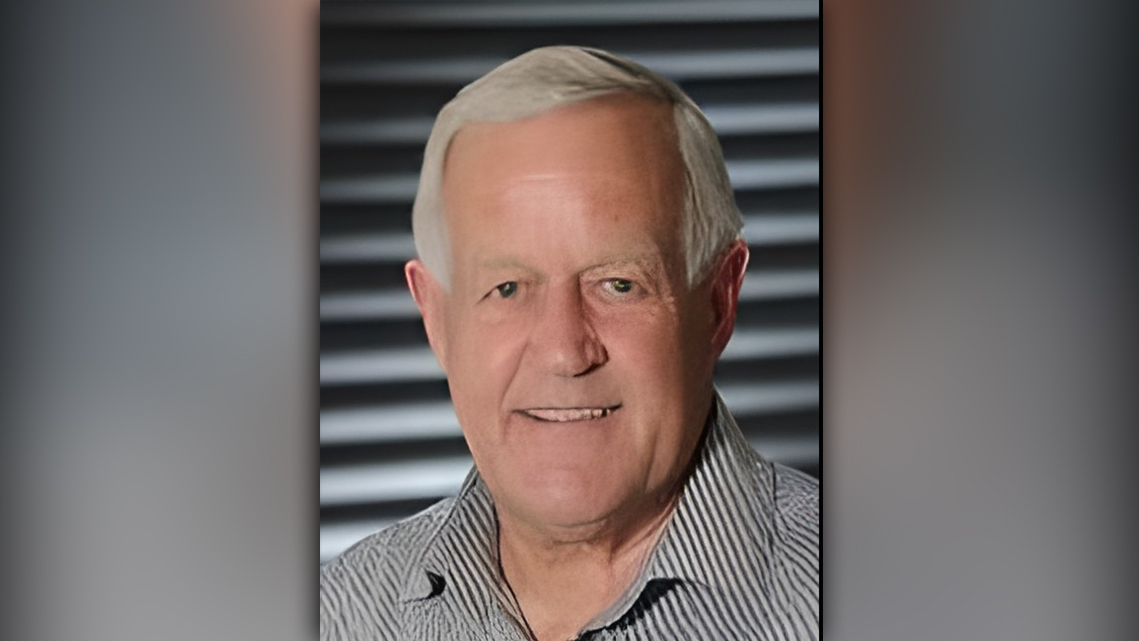
Dr Bruce Bryant, Director, Forensics Limited
In the world of finance and law, where decisions are often shaped by interpretation as much as by fact, clarity is not always easy to come by. Behind every claim, valuation, or tax position lies a layer of assumptions and financial judgments that are not always visible at first glance. What appears precise on paper can quickly become contested under scrutiny, particularly when the outcome carries legal, financial, or personal consequences. Understanding what the numbers truly reveal and just as importantly, what they leave unsaid, requires more than technical proficiency. It calls for the ability to dissect detail, challenge underlying positions, and translate complexity into clear, defensible conclusions.
This is where Forensics Limited has built its reputation. Built on decades of experience and a strong focus on precision, the Auckland-based firm provides trusted investigative and forensic accounting services across New Zealand, supporting a wide range of corporate and personal needs. It works on complex accounting, taxation, property relationship, and Accident Compensation matters, with much of its work coming through referrals from accounting and legal professionals.
A Mind Wired for Numbers
The origin of Forensics Limited is closely tied to the journey of its founder, Dr Bryant Bryant, whose relationship with numbers began not as a career choice, but as a form of clarity. Growing up with undiagnosed dyslexia, reading and writing were often challenging for him. Numbers, on the other hand, were easier to understand and work through. As he often says, “My first language is numbers. Understanding financial statements thoroughly and efficiently has always been at the core of everything I do.”
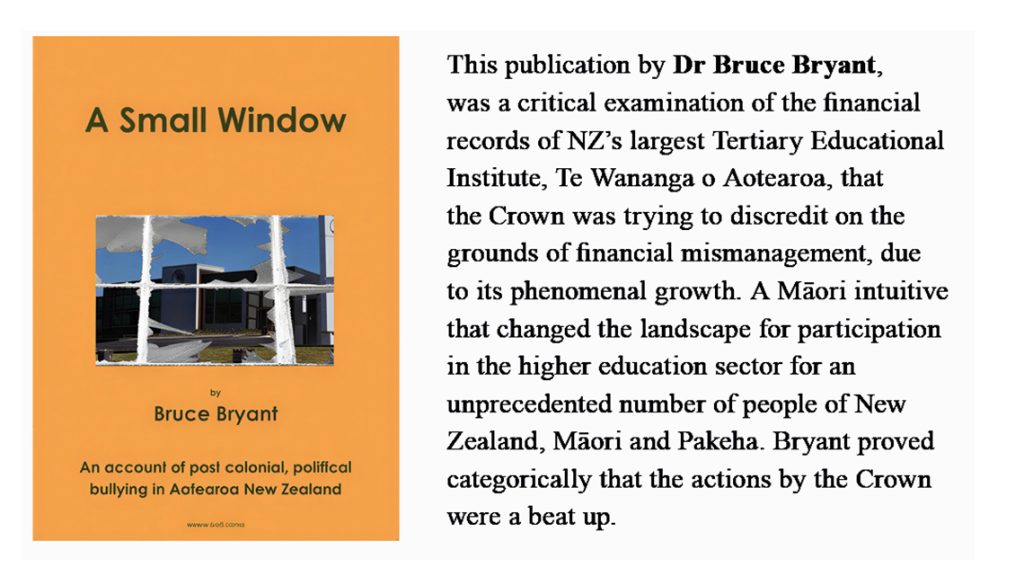
That affinity for numbers naturally drew him to pursue accounting at the age of sixteen, and what began as a personal comfort with figures steadily evolved into a rare professional ability to extract meaning from the most complex financial information. In 1993, he founded Financial Analysis Specialists Limited, where that ability was quickly put to work in demanding real-world conditions. The firm worked closely with New Zealand’s largest workplace accident insurers, helping them interpret financial data in complex loss-of-earnings claims. These cases required careful analysis and clear explanations—something Dr Bryant became known for. His role later extended to representing clients in significant fraud trials. Alongside this, he spent a decade in academia as a Senior Lecturer at a New Zealand business school, while also serving as an adjunct professor at an Australian university. But when COVID reshaped the professional landscape across the world, Dr Bryant chose to return to investigative and forensic accounting, and that decision led to the creation of Forensics Limited, one of New Zealand’s most trusted voices in investigative accounting.
Turning Challenges into Structure and Strength
Growth in a specialist practice rarely comes without friction, and Forensics Limited is no exception. For Dr Bryant, the demands of running a forensic accounting firm have always centred on three things: staying ahead of a constantly shifting regulatory landscape, managing the inherent unpredictability of the work, and surrounding himself with the right people. His academic background has been a quiet but significant advantage on the first front. Years of teaching required him to engage deeply with legislative and standards changes as they emerged. That same rigour now shapes how the firm approaches professional development, ensuring it remains well-positioned as standards continue to evolve.
The unpredictability of workflow is another reality of forensic accounting that Dr Bryant has learned to manage with care. No two engagements are alike — some resolve quickly, while others unfold over months. It is not always possible to know at the outset how complex a matter will become. To manage this, the firm takes a structured but flexible approach. Clients are given a clear outline of what will be delivered, along with realistic timeframes and, where possible, fixed costs. Many engagements are approached in stages, allowing both the team and the client to reassess as the work progresses and the requirements become clearer.
Building the right team has been equally deliberate. Dr Bryant has often hired from people he has taught — those who are capable, but also grounded. He is not looking simply for technical proficiency. What matters to him is open-mindedness and clarity of thought. Above all, he values people who have the honesty to say when they don’t know something.
Clarity over Complexity
In forensic accounting, credibility is everything. Reports are not just reviewed—they are challenged, dissected, and often tested under cross-examination in court. Forensics Limited approaches this with a philosophy that runs counter to conventional thinking: complexity does not strengthen an argument; clarity does. “What I learned undertaking expert witness services was that ‘big’ words, especially too many of them, often do not ‘win the day’. Being dyslexic, I believe, made me very careful in how I express myself in writing (thank goodness for spell check!!) and I have regularly been thanked by Judges for the clarity and simplicity of my submissions and evidence,” explains Dr Bryant.
He has also learned that, in cross-examination, less can be more. Not every question requires a long explanation. A precise, well-placed answer, sometimes just a single word, can carry far more weight than a detailed response that leaves room for interpretation. This clarity extends into every layer of the firm’s process. Calculations are checked and rechecked. Reports are peer-reviewed. External expertise is sought when necessary. Even emerging technologies, including legal and tax-based AI platforms, are also used by the firm to support its analysis, but with a degree of caution. These tools assist; they don’t replace professional judgement.
Working Through Complex Financial Disputes
While the technical side of forensic accounting is demanding, the human side is often more unpredictable. Tax disputes, for instance, are often the most difficult to manage. In many cases, the work involves challenging a position taken by the taxation authority or asking them to consider a point of view that may be unique or untested. In Dr Bryant’s experience, much of this comes down to building a rapport with the officers handling the matter, being scrupulously honest, and, above all, remaining patient. “Again, avoid big words, make arguments logical and easy to follow, and where possible, provide the solution to the problem we are confronting,” he emphasizes.
In contrast, business valuations and relationship property cases introduce a different layer of nuance. In these cases, the Courts require a different approach to relationship property valuations compared to standard business valuations. “The ‘science’ behind business valuations is relatively well established; the real essence of a sound valuation is how one expresses the reasons for judgments that inevitably have to be made in arriving at the valuation range,” adds Dr Bryant.
Fraud investigations follow a more structured path. As Dr Bryant explains, they are typically broken into three stages. The first—around 50% of the work—involves data collection, often the more tedious part, as it typically requires working through older files. The next 25% is data analysis, focused on understanding what the material actually reveals. The remaining 25% goes into preparing the conclusions or the brief of evidence. This final stage is critical. If a Judge or Jury does not clearly understand the findings, even a strong analysis can lose its impact.
Continuing the Pursuit of Clarity and Accountability
In an increasingly competitive commercial environment, the demand for forensic accounting is unlikely to fade. As Dr Bryant observes, competition often pushes individuals and organisations to test boundaries, sometimes within the law, and sometimes beyond it. Over time, those boundaries are challenged in court, shaping the development of common law and, to an extent, taxation law, with legislation evolving either to accommodate new interpretations or to close emerging loopholes.
In areas such as relationship property disputes, the challenges are rarely just technical. These matters are often driven by emotion—hurt, frustration, and, at times, a desire for retribution. There is seldom a clear winner, even if one party believes otherwise. The firm’s role in such cases is to remain objective, stepping back from the surrounding tension to focus on the facts. While New Zealand’s Property (Relationships) Act provides a strong framework, the way it is applied can quickly become complicated. Many disputes the firm encounters stem from a straightforward issue — a lack of understanding of the subject. This is particularly evident in compensation claims, where expectations do not always align with how calculations work in practice. Bridging this gap requires not just technical expertise but the ability to communicate financial truths with clarity and conviction. “The profession we operate in is firmly anchored in maintaining exceptionally high standards, both at national and international levels,” affirms Dr Bryant. “Yet, the real challenge for any practitioner lies not in access to learning, but in discernment: knowing where to focus their efforts and how to channel that learning into their specific area of expertise,” he adds.
In this landscape, Forensics Limited sees its role as both technical and principled. Not all stakeholders welcome transparency or accountability, but upholding those standards is critical to the integrity of the financial system. Delivering on that responsibility demands not only expertise but an ongoing commitment to learning. As Dr Bryant puts it, “one qualification is never enough. In this field, learning does not stop.”