
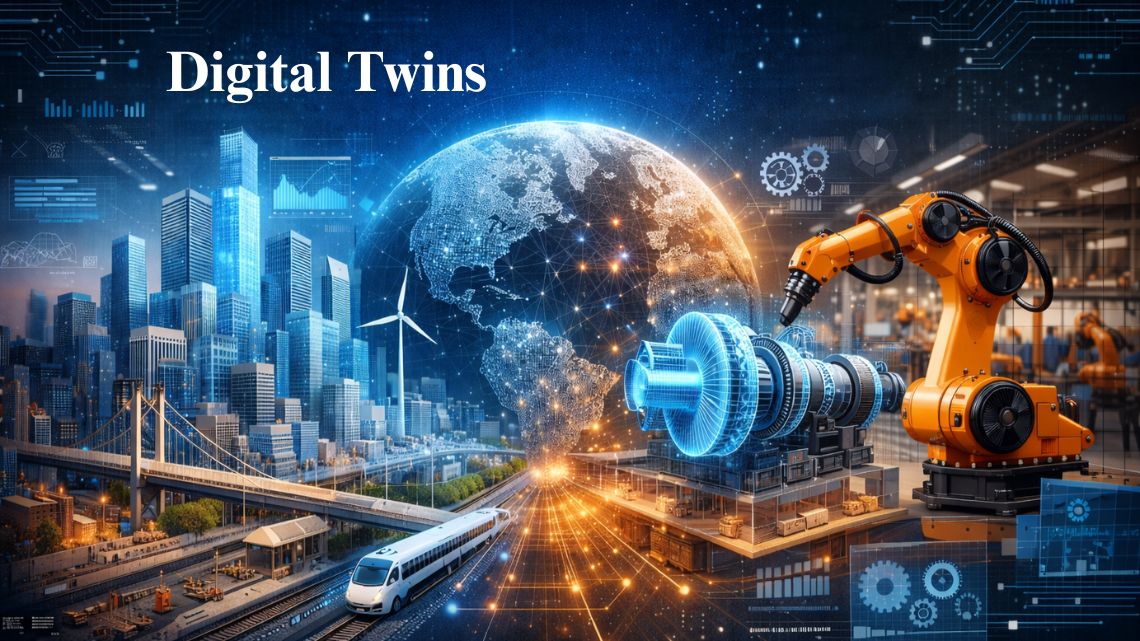
Digital transformation is revolutionizing the domains of infrastructure and manufacturing, leading to a transformative shift toward highly intelligent, and data-driven operational endeavors. One of the most significant innovations in this area is the digital twin, which simulates virtual versions of a physical asset that can be monitored in real-time and provides predictive information about the asset’s future state. When combined with digital technology including Internet of Things, artificial intelligence, and advanced analytics, an organization can transition from reactive decisions based on prior historical interpretations to proactive decisions based on emerging trends or discoveries. This blog illustrates the important ways digital twins support efficiency, resilience, and optimization throughout the lifecycle of modern industrial and infrastructure systems.
What Is a Digital Twin?
Digital Twin is a dynamic and real time virtual representation of a physical asset, system or process. In contrast to static assets, digital twins accurately evolve by integrating live data to replicate life and behaviour of its physical counterpart, leading to optimized analysis and monitoring.
Core components
A reliable digital twin system consist of three essential pillars:
- The physical asset: The real world object, including system, machine or infrastructure. (eg: a bridge, or factory floor)
- Digital model: A high fidelity virtual simulation of the physical asset based on engineering, AI and data integration to replicate a physical model.
- Data integration layer: A continuous and bilateral stream of historical and real time data that synchronizes between the physical and digital system.
How Digital Twins Work
- Data Collection (IoT Sensors)
Data collection is the primary process of simulating a physical system. Key operational parameters like temperature, pressure, vibration, energy consumption, and performance metrics are captured by IoT sensors embedded into physical assets. This granular level of data provides visibility on asset behavior.
- Data Transmission & Processing
Once captured, data is shared to a cloud or edge computing platform using secure communication networks. These computing platforms process massive quantities of both structured and unstructured data to provide scalability and low latency for real-time applications.
- Virtual Modeling
The data processed feeds into a virtual model—a mathematical blueprint of the physical system. The model combines engineering specifications, operational environments, and environmental conditions to create a highly accurate virtual environment that can accurately mimic the physical system.
- Analysis & Simulation (AI)
Artificial Intelligence (AI) and Machine Learning (ML) algorithms process real time data incomings to establish patterns, identify anomalies, and predict failure mode probabilities. Organizations can use high-fidelity simulations to model various scenarios, optimize system performance, and assess the impact of changes in operations on the physical system without affecting actual operations.
- Bidirectional Feedback
The two-way flow of information is one of the major characteristics of digital twins. Information generated by the digital models can be transferred back to the physical system for performing automated adjustments, optimizing processes, and implementing continuous improvement initiatives to improve responsiveness and efficiency, instrumental for digital Leadership in today’s ever evolving landscape.
Benefits of Digital Twins
- Operational Efficiency
Digital twins deliver visibility into asset activity in real-time, therefore businesses are able to optimize operations through evaluating blind spots, predicting equipment failures and improving workflow efficiency. This helps prevent occurrences of any catastrophic events and ensure most efficient workflow layouts.
- Cost Reduction
Digital twins primarily eliminate the reliance on trial-and-error in financial controls through the efficiencies of predictive maintenance on critical assets. Companies are able to reduce unexpected downtime and virtual prototyping is significantly more cost efficient than building physical models. Digital twins also facilitate asset longevity, as it tracks real time wear and tensions, operations can be optimized by maintaining ideal parameters, instrumental for reducing cost in highly expensive infrastructures such as aircraft engines. In the leadership digital age, the synchronization of operational interruptions enables financial control over an extended period of time.
- Risk Mitigation
The feasibility to continuously assess with exceptional accuracy using advanced analytic tools, businesses can foster structural integrity without risk in high stake environments. Digital twins can be leveraged as a valuable means to predict potential system failures and vulnerabilities, as it accurately simulates physical system environments. With this, enterprises can become more proactive toward eliminating operational bottlenecks, and sustain continuity digital entrepreneurship endeavors.
- Sustainability
Digital twins are a safe sandbox for companies to streamline green industrialization. It significantly enables energy management and waste reduction through simulations of hazardous scenarios, leading to optimal resource utilization. By facilitating real time energy optimizations such as smart buildings, organizations can reduce environmental impact while adhering to ESG benchmarks. In addition, precise simulations of raw martials to final executions, reduces the amount of scrap generation, and helps enhance sustainability.
- Enhanced Decision-Making
With the feasibility to access both real-time and predictive data, decision-makers can use the right information to make better decisions based on factual data. Additionally, by analyzing various scenarios prior to making a decision on a particular course of action, businesses significantly decrease the degree of uncertainty and establish a fast forward method to develop their strategic initiatives.
Conclusion
The integration of Digital Twin across the industry sectors is transforming the way companies maintain and improve infrastructure and manufacturing systems. They significantly help optimize operations, as it facilitates efficiencies such as real-time visibility, predicting future events, and driving continuous improvement. Management in Digital Twin ecosystems, reduce costs and exposure to risk, while providing organizations with the opportunity to create more sustainable operational infrastructures. This enhanced convenience and real time simulation intelligence enables organizations to innovate, maintain operational excellence, and deliver long-term value in the emergence of highly data reliant industries.
Visit APAC Business Standard for more articles.
For Connect with Us:
About Us: https://about.me/apacbusinessstandard/
Pinterest: https://in.pinterest.com/apacbusinessstandard/
X (Twitter): https://x.com/Apac_b_standard
linkedin: https://www.linkedin.com/company/apac-business-standard/
Facebook: https://www.facebook.com/ApacBusinessStandard
Instagram: https://www.instagram.com/apacbusinessstandard/
Medium: https://medium.com/@apacbusinessstandard
BlogSpot: https://apacbusinessstandard.blogspot.com/