
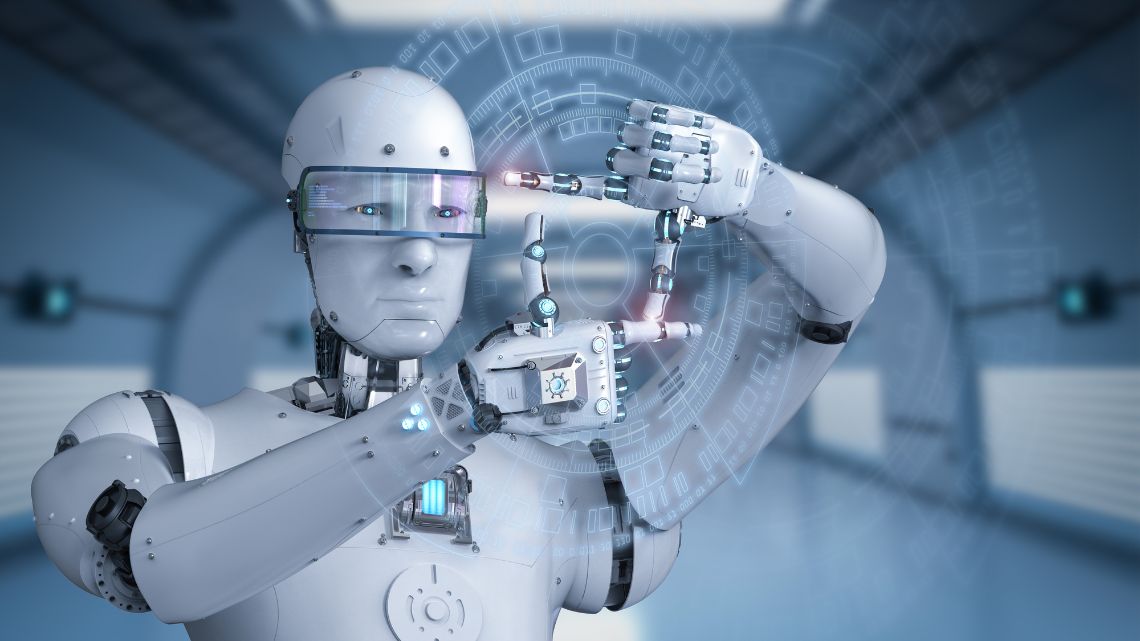
Robotics in business is at a juncture of pivotal transition from isolated automation tools to a strategic buffer against operational disruptions across industries. With the convergence of physical AI with robotic fleets, facilitating dynamic deployment environments, energy-efficient hardware, and real-world workflows that are inaccessible solely with manual efforts. Beyond automation of workflows, robotics in business is revolutionizing aspects of productivity, labor frameworks, and operational paradigms, equipping enterprises for the next phase of industrial restructuring.
How Robotics is Future-Proofing Businesses
- Operational Resilience and Agility
Robotics in the domain of business operations serves as a protective layer to external disruptions such as labor constraints or supply chain inefficiencies. Unlike manually conducted operations, which are often confined within fixed work hours, efficiency is influenced by mental, physical, and environmental factors; robotic fleets can be leveraged to facilitate round-the-clock uninterrupted operations and sustain baseline productivity despite challenges. The introduction of physical AI in business robotics—autonomous mobile robots (AMRs)—has enabled seamless software updates, translating to dynamic rerouting of workflows.
- Strategic Scalability
As opposed to the traditional infrastructures and operational systems, models like Robotics-as-a-Service (RaaS) provide businesses enhanced scalability without leading to financial constraints like heavy upfront costs. It facilitates businesses’ deployment of robotic units that are aligned with demand fluctuations, a strategic edge for even SMEs and small-scale startups. By maintaining capital expenditures minimally, the business has become more agile, especially in sectors where demand variability is high.
- Workforce Evolution
Robotis is at a tipping point of transformation from AI-powered software models to humanoid and hyperscalers. Beyond a comprehensive overhaul, smart businesses are leveraging robotics as a prudent step to redefining workforce roles. Robots are being harnessed to hyperautomate recurring tasks by emphasizing the redirection of employee intelligence toward strategically valuable and cognitively demanding functions. This new wave of transformation compels capabilities of hybrid skills and evolves beyond doers to orchestrators of robotic fleets.
- Data-Driven Decision Making
In this age, breakthroughs in robotic systems are significantly data-enabled integrations. With data analytics and AI simulation, businesses can cultivate foolproof insights to reform performance, tackle obstacles, and leverage opportunities effectively. Artificial intelligence integrated models enable organizations to forecast demand, maintenance, and process optimization techniques in advance. For example, in a digital twin, robots feed real-time information for driving simulations and identify bottlenecks before the real occurrence of bottlenecks.
Key Areas of Transformation
Robotics is revolutionizing multi-tier operational domains from logistics and supply chain to healthcare. Witnessing the recent industry researches, it is higjlighted that the global robotics market is projected to exceed over $200 billion by the year 2030, with the expandeed adoption across non-industrial sectors.
Emerging Technology Trends
- Generative AI Integration
The sophisticated merge of Gen AI and robotics is providing a broader spectrum of potential for autonomy. By enabling efficiencies to process unstructured data, orient themselves within a new environment, and produce real-time responses or actions, robotics greatly improves the synchronous collaboration between humans and machines.
- Digital Twins
Using technology trends like digital twins, businesses can build a virtual representation of their actual physical system. This allows for robotic simulation of process workflows (with no real-world impact), testing of possible scenarios, and eliminating the risk of failure in deployment. Ultimately, this is highly beneficial in dynamic businesses such as manufacturing and logistics.
- Mobile Manipulators (MoMas)
Mobile manipulators (MoMas) are robots that have combined both mobility and robotic arm capabilities. This new robotic platform is capable of moving through many different types of environments and performing delicate tasks. Because of this design, they are becoming more broadly utilized throughout all things automated, including warehouses, hospitals, and even retail sectors.
Innovative Business Models
- Robotics-as-a-Service (RaaS)
Democratized automation models (OPEX) such as RaaS are one of the revolutionary concepts that enabled major industrial transformations over the years. In addition, with zero upfront cost, it facilitates businesses of any scale’s accessibility of services and full-stack support, unlocking groundbreaking opportunities in operational scalability.
- Sector Expansion
Beyond IT and tech, robotics is expanding at a rapid pace into industries including agriculture, construction, health care, etc. Precision agriculture robots are increasing the yield potential from crops while construction robots are providing safer working conditions and improving processes on construction sites.
Vulnerabilities and Risks
- Cybersecurity Gaps
As robotics evolve through IT and OT convergence, they are more exposed to being attacked by cybercrime. If a single robotic endpoint is compromised, it increases vulnerability toward hacking and safety hazards, allowing hackers access to the sensitive financial and business information. Implementing solid frameworks for cybersecurity is crucial for anticipating such asset damages.
- Operational & Physical Hazards
While safety has improved in the area of robots, operational risks are still a persisting challenge, especially now work environments are transitioned to human-AI collaborations. Being compliant with safety standards and fail-safe operational options are pertinent to sustaining operations safely.
- Ethical & Workforce Challenges
The aggressive transition toward robotic integrations has raised concerns about the ethics, such as job replacements by holistic automations and inequality in recruitments. Companies must take into account responsible transition plans to hiring a workforce through skill upgrades and initiatives for updating employee knowledge.
Conclusion
In a dynamic landscape of economic disruptions, the introduction of robotics has supported reshaping business operations comprehensively. Transcending from an optional capability, the leap into robotic collaborations in business has enabled resilience, scalability, and informed decision-making. The developments in models driven by generative AI, machine learning, digital twins, and mobile manipulators are continuously evolving; businesses that proactively integrate these efficiencies will lead at the forefront as future-ready enterprises.
Visit APAC Business Standard for more articles.
For Connect with Us:
About Us: https://about.me/apacbusinessstandard/
Pinterest: https://in.pinterest.com/apacbusinessstandard/
X (Twitter): https://x.com/Apac_b_standard
linkedin: https://www.linkedin.com/company/apac-business-standard/
Facebook: https://www.facebook.com/ApacBusinessStandard
Instagram: https://www.instagram.com/apacbusinessstandard/
Medium: https://medium.com/@apacbusinessstandard